Abstract: Explore the year-long observation of the Crab Apple tree (Malus) in Fort Collins, Colorado. From its 34-million-year fossil history in the Green River Formation to its winter survival and spring blooming, student scientist Yojay Yun documents the life cycle and etymology of this resilient hybrid ancestor.
The Ancient History of Malus in Colorado
Crab Apple, scientifically known as Malus, is native to temperate regions of the Northern Hemisphere, with populations found in Europe, Asia, and North America. Remarkably, their presence in Colorado dates back to an astonishing 37.2 – 33.9 million years ago,1 as evidenced by fossils unearthed2 in the Green River Formation. These paleontological findings suggest that the ancestors of the Malus genus thrived in a much warmer, subtropical environment than the current Colorado climate. This long evolutionary history highlights the incredible adaptability of the Crab Apple through various geological epochs.
A Peculiar Name
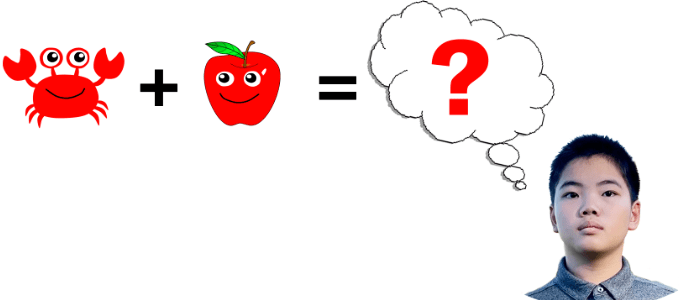
Crab Apple, I couldn’t help but wonder about this peculiar name when I first saw it in our science textbook 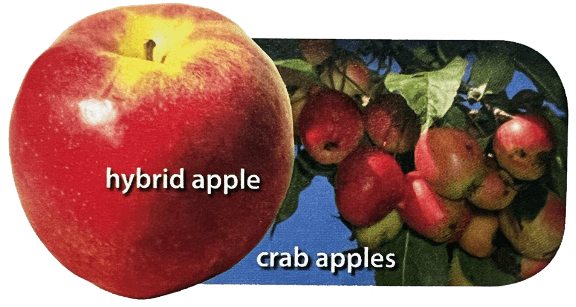 3. I was curious about why people would give such a strange name to this plant.
Seasonal Characteristics and Botany
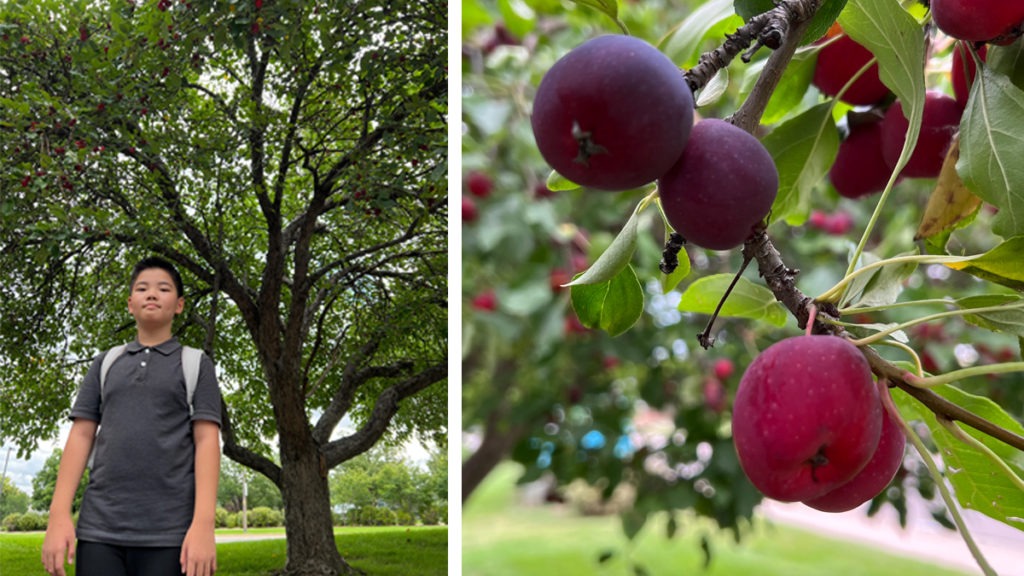
Fruit Profiles (September)
▪ Size Approximately 1 inch in diameter
▪ Color Red, Dark red, Deep red
▪ Shape Oval
▪ Taste Sour, little sweet
▪ Texture Crisp
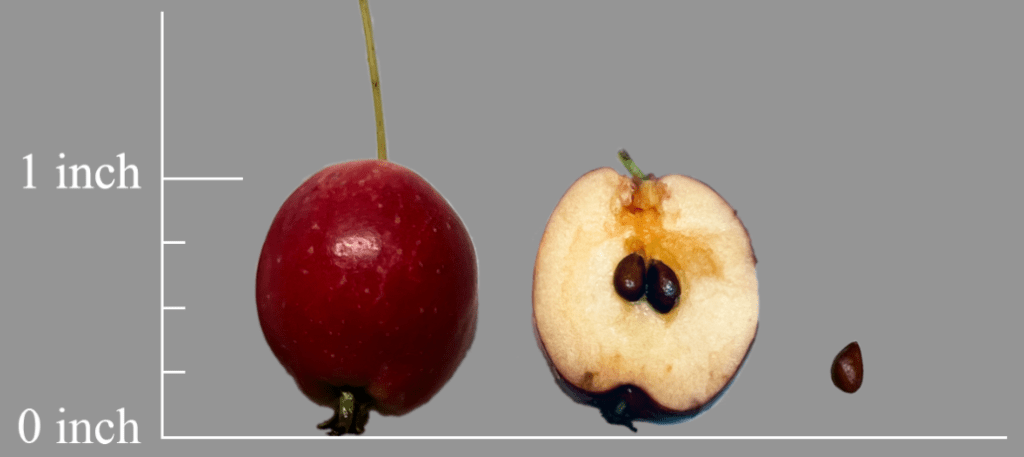

Wash the picked fruits, put them in the juicer and you will get a delicious CrabApple juice.
TIPS ◆ Remove seeds ◆ More sugar
Leaf of Crab Apple
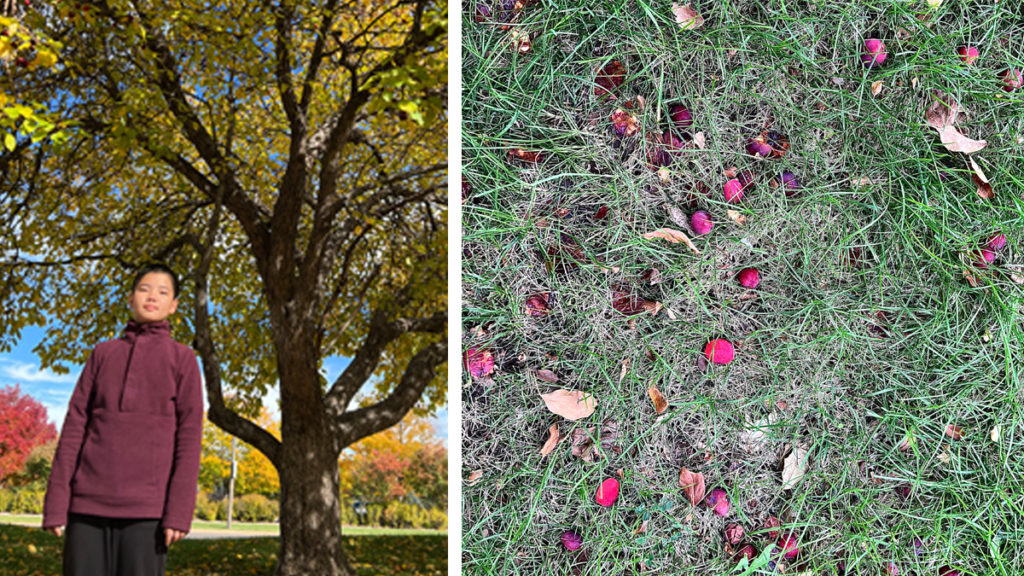
Foliage and Winter Transition (October)
The simple, ovate leaves that display serrated edges.
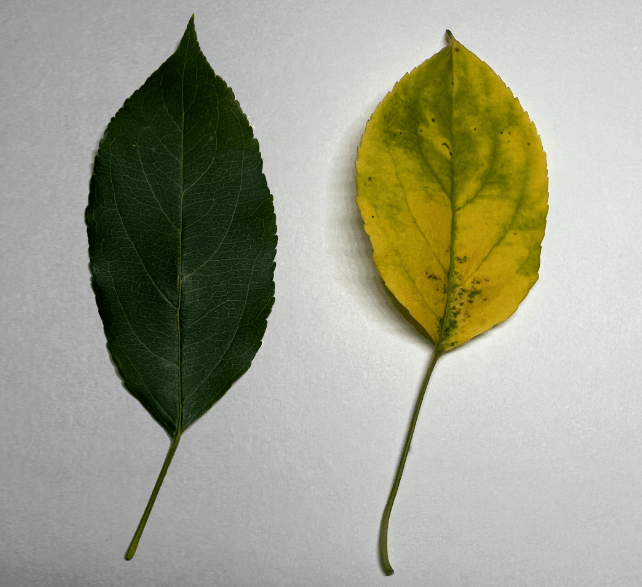
Tree of Crab Apple
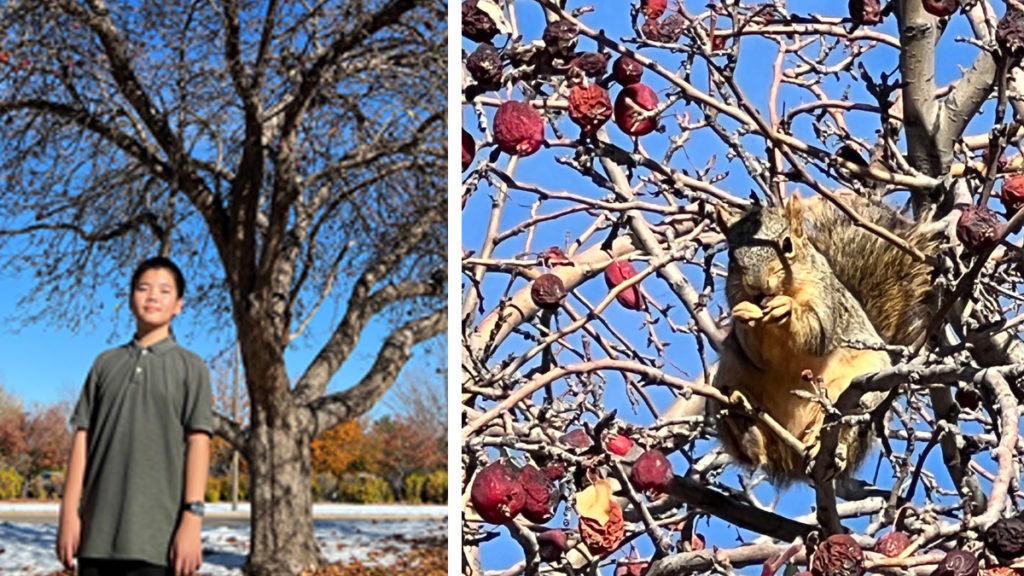
On October 29th, Fort Collins experienced its first snow of this winter. The following day, all the leaves had fallen from the Crab Apple tree, but many fruits still clung to the branches, which attracted squirrels. I observed two squirrels munching on the Crab Apple fruits, and it brought a smile to my face—seeing those two little fellows enjoying their meal.
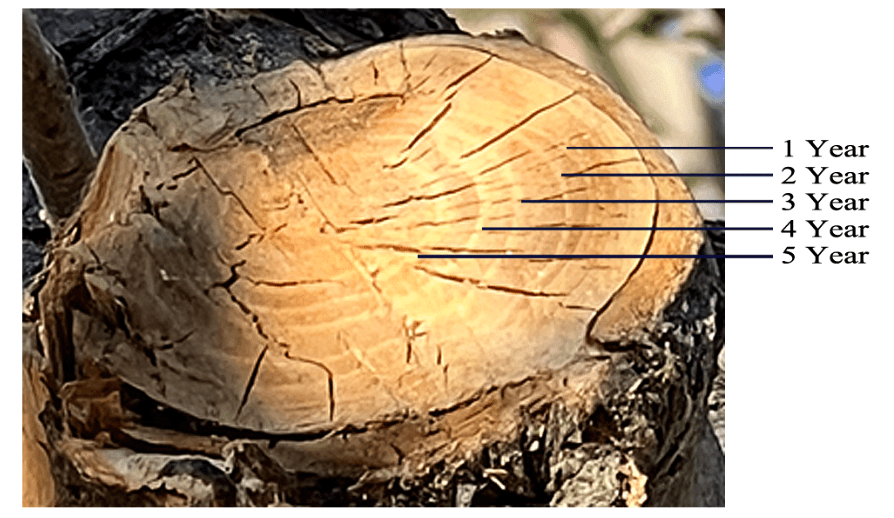
The Spring Bloom (April)
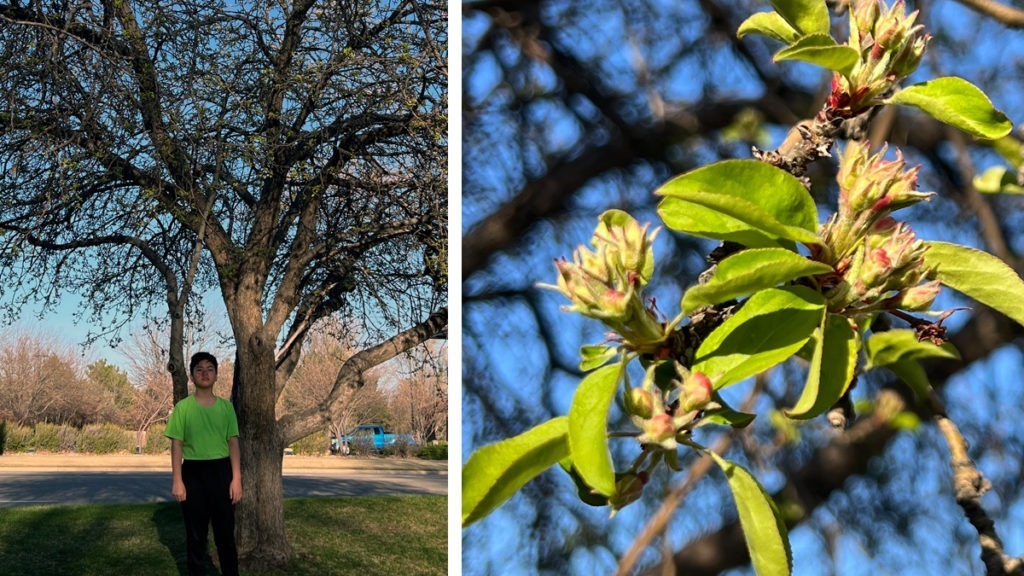
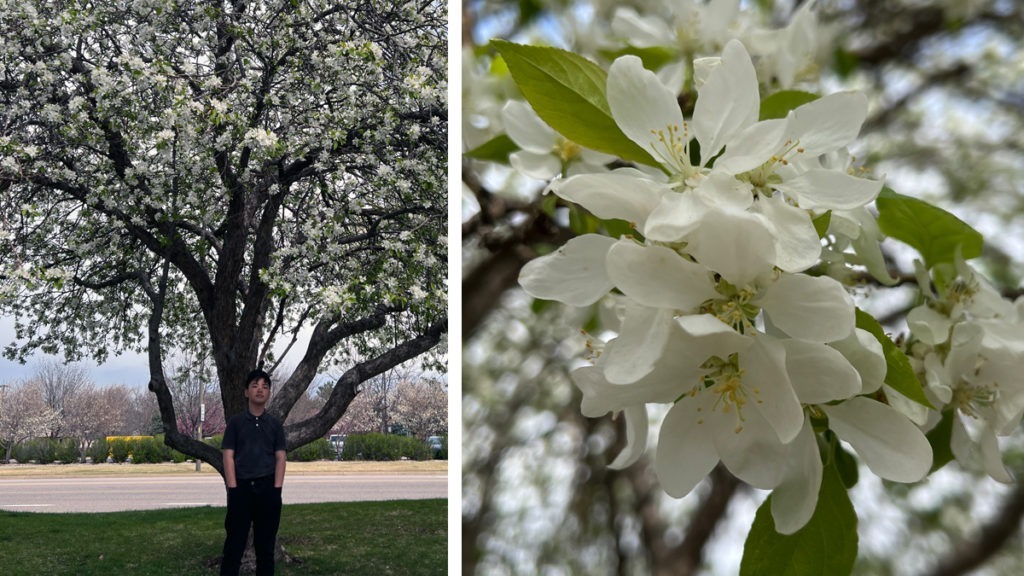
I have been waiting for the flowers to bloom for an entire winter, and finally, the day has arrived. They are white, with five petals, and very beautiful. The stunning display of flowers is in front of my eyes, and I am so happy!
Why the Name “Crab Apple”?
Why does it have the name “Crab Apple”?
- A. Its canopy looks like ‘crabbed’ because of gnarled and twisted twigs.
- B. Its fruit is sour and astringent, and the word “crab” implies its taste.
- C. The shape and color of its fruit look like a crab’s pincer
Among all the possibilities of its names, through my observation, the conclusion is more inclined to be A. The “crabbed” appearance of the ancient, twisting branches is a distinctive structural feature. While the sour taste (Option B) is certainly accurate, the visual architecture of the tree most likely inspired the original Middle English naming conventions.
Hybrids and Cultivated ApplesSTION
In our science textbook (Observing God’s World), the Crab Apple is used to illustrate the concept of hybrids, shows an “example of beneficial hybrids.” Based on my findings, I suggest adding a caption: “The Crab Apple is a wild ancestor of the modern cultivated apple; hybridization has allowed us to develop the larger, sweeter fruits we eat today.”
- MacGinitie, H. D. (1953). Fossil Plants of the Florissant Beds of Colorado. The Carnegie Institution of Washington. ↩︎
- Florissant Flora (Eocene of the United States).(n.d.). The Paleobiology Database. https://paleobiodb.org/classic/ ↩︎
- Observing God’s World (2010, p.21). Abeka Book ↩︎
Guiding teacher Kayla Faulkner

Related Article